MotiveCrate Guides
Windshield Washer Not Working in Winter? Causes and Fixes
Windshield Washer Not Working in Winter? Causes and Fixes - Washer works in summer but fails in winter? Why fluid freezes, how to thaw safely, what damage ice causes, and how to prevent it before the first freeze. | MotiveCrate
September 21, 2026 · 5 min read · By MotiveCrate
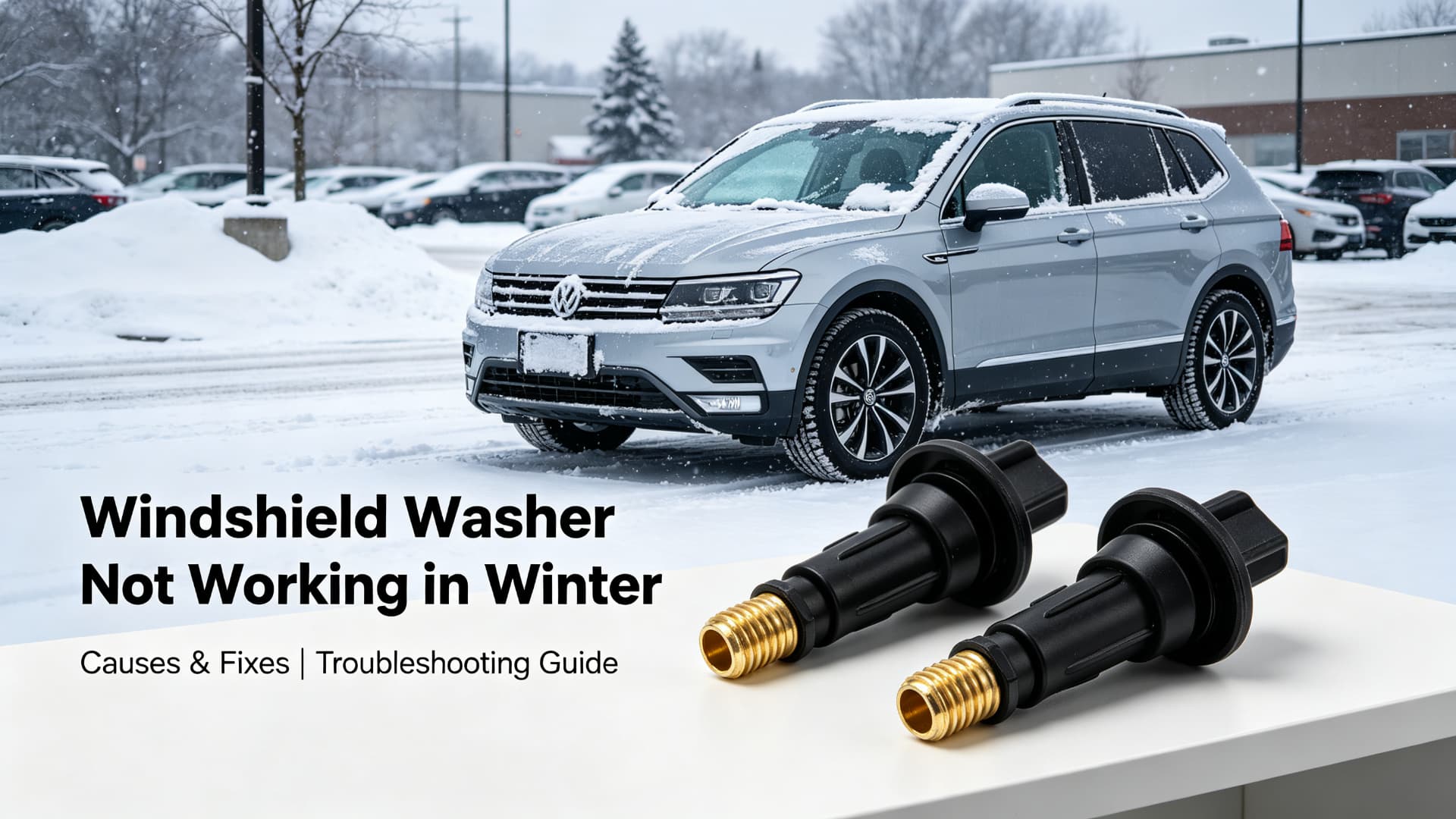
If your washer works in summer and fails in winter, the fluid is almost always the problem — not the pump or nozzle. Water-based or under-mixed washer fluid freezes in the line, and the pump cannot move ice. The fix is usually a fluid change, but freezing can also crack the nozzle housing or split the hose, in which case a part replacement is needed. Here is how to tell which situation you have.
First: identify what actually froze
| What you observe | What froze | Fix |
|---|---|---|
| No spray, pump buzzing | Ice in the line or nozzle | Thaw, then change fluid |
| No spray, pump silent | Fluid frozen solid, or blown fuse | Thaw; check fuse |
| Spray from one side only | Ice in that branch line | Thaw that branch |
| Spray pattern distorted after thaw | Nozzle housing cracked by ice | Replace nozzle |
| Wet patch appears after thawing | Hose split by ice expansion | Replace hose |
| Works, but freezes again next cold morning | Fluid not rated for your climate | Change to winter-rated fluid |
Key point: ice in the line makes the pump buzz because it is working against a blocked line. Silence means the fluid is solid or the pump has no power.
The cause: fluid that is not rated for your climate
Washer fluid is rated by its freeze point. Common types:
| Type | Typical protection | Suitable for |
|---|---|---|
| Summer / bug-wash concentrate | Around −5 °C (23 °F) | Warm climates only |
| All-season premix | Around −20 °C (−4 °F) | Mild winters |
| Winter premix | Around −35 °C (−31 °F) | Cold winters |
| Concentrate mixed to label | Depends on ratio | Any, if mixed correctly |
Two mistakes cause most winter failures:
- Using summer fluid in winter. It freezes well above the temperatures a real winter reaches.
- Diluting winter concentrate. People top up with water to make it last. That raises the freeze point and defeats the product.
Never top up washer fluid with plain water in winter. It is the single most common cause of frozen lines — and it also scales the nozzle.
How to thaw a frozen washer system
- Park somewhere warm — a heated garage, or an underground car park. This is the safest method.
- Do not pour hot water on the windshield or into the reservoir. Thermal shock cracks glass and plastic.
- Once thawed, pump the system through to clear the old fluid from the lines and nozzle.
- Refill with fluid rated well below your expected minimum temperature.
- Run the washer briefly so the new fluid reaches the nozzle before the next cold night.
If you cannot get the car indoors, a warm (not hot) garage-temperature premix poured into the reservoir, followed by a long drive with the engine bay warm, will often clear a partially frozen line.
After a freeze: inspect for damage
Ice expands, and washer components are thin plastic and rubber. After any hard freeze, check:
| Component | What to look for |
|---|---|
| Nozzle | Hairline cracks in the housing; distorted spray pattern after thaw |
| Hose | Split sections, especially at bends and near clamps |
| Reservoir | Cracks near the base or filler neck |
| Pump | Continued buzzing with no flow after thawing |
A nozzle cracked by ice will not be fixed by thawing — the spray pattern stays wrong. See our nozzle buying guide to match the right part number.
Prevention checklist before the first freeze
- [ ] Drain or dilute out any summer fluid remaining in the reservoir
- [ ] Fill with winter-rated fluid matched to your climate, not your region's average
- [ ] Run the washer long enough to push new fluid through both nozzles
- [ ] Check the reservoir cap is intact and sealing
- [ ] Inspect nozzle housings for existing hairline cracks
- [ ] If any line has split before, replace the hose before winter
Buy fluid rated colder than your worst expected night, not your average. A single −30 °C night defeats fluid rated to −20 °C.
Frequently asked questions
Why does my washer only stop working in winter?
Because water-based or under-mixed fluid freezes in the line and nozzle. The pump cannot move ice. Changing to properly rated winter fluid fixes it.
Can frozen washer fluid damage my car?
Yes — expanding ice can crack the nozzle housing, split the hose and crack the reservoir. That is why a freeze should be followed by an inspection, not just a thaw.
Is it safe to pour hot water into the washer reservoir?
No. Thermal shock can crack the plastic reservoir and, if spilled on cold glass, the windshield. Use warm fluid at room temperature.
How do I stop washer fluid freezing again?
Use fluid rated colder than your expected minimum temperature, and never top it up with plain water. Running the washer after refilling pushes the new fluid through the lines.
My washer still does not work after thawing — why?
Either the nozzle housing cracked from ice expansion, the hose split, or the pump failed while working against a blocked line. Check for wet patches (split hose) and a distorted spray pattern (cracked nozzle).
Why does the pump buzz but nothing comes out?
A buzzing pump working against a blocked line is the classic sign of ice in the hose or nozzle. If it buzzes after thawing too, the nozzle or line is still blocked — see 7 causes of clogged nozzles.
Should I use concentrate or premixed winter fluid?
Either works if used correctly. Premixed is foolproof; concentrate is cheaper but only if you mix to the label ratio — diluting it is what causes winter failures.
Do you sell winter-rated parts?
We supply nozzles, hoses and check valves. Fluid is not something we stock — buy fluid locally, rated for your climate. See all windshield washer nozzles.
Related guides
- Clogged Washer Nozzle: 7 Causes
- Washer Check Valve: Why Spray Arrives Late
- Washer Hose Kit Installation
- Windshield Washer Nozzle Buying Guide
- All windshield washer nozzles
MotiveCrate supplies aftermarket auto wear parts — oil drain plugs, gaskets, windshield washer nozzles, trim clips and fasteners — for vehicles across the United States, Canada and Mexico. Verify the OEM part number before ordering. We do not sell safety-critical components such as braking, steering, suspension, airbag or seat-safety parts.
Need help matching a part?
Email service@motivecrate.com or message us on WhatsApp with your year, make, model and trim and we will confirm the part number for you.
MotiveCrate supplies aftermarket replacement parts and is not affiliated with any vehicle manufacturer. Fitment information is a compatibility guide — always verify the part number before ordering.