MotiveCrate Guides
Oil Drain Plug Gasket vs Crush Washer: What’s the Difference?
Compare an oil drain plug gasket and crush washer by material, size, sealing direction and reuse rules. Learn how to stop a drain-plug leak and choose the correct replacement.
Published October 26, 2026 · Updated October 26, 2026 · 7 min read · Reviewed by MotiveCrate
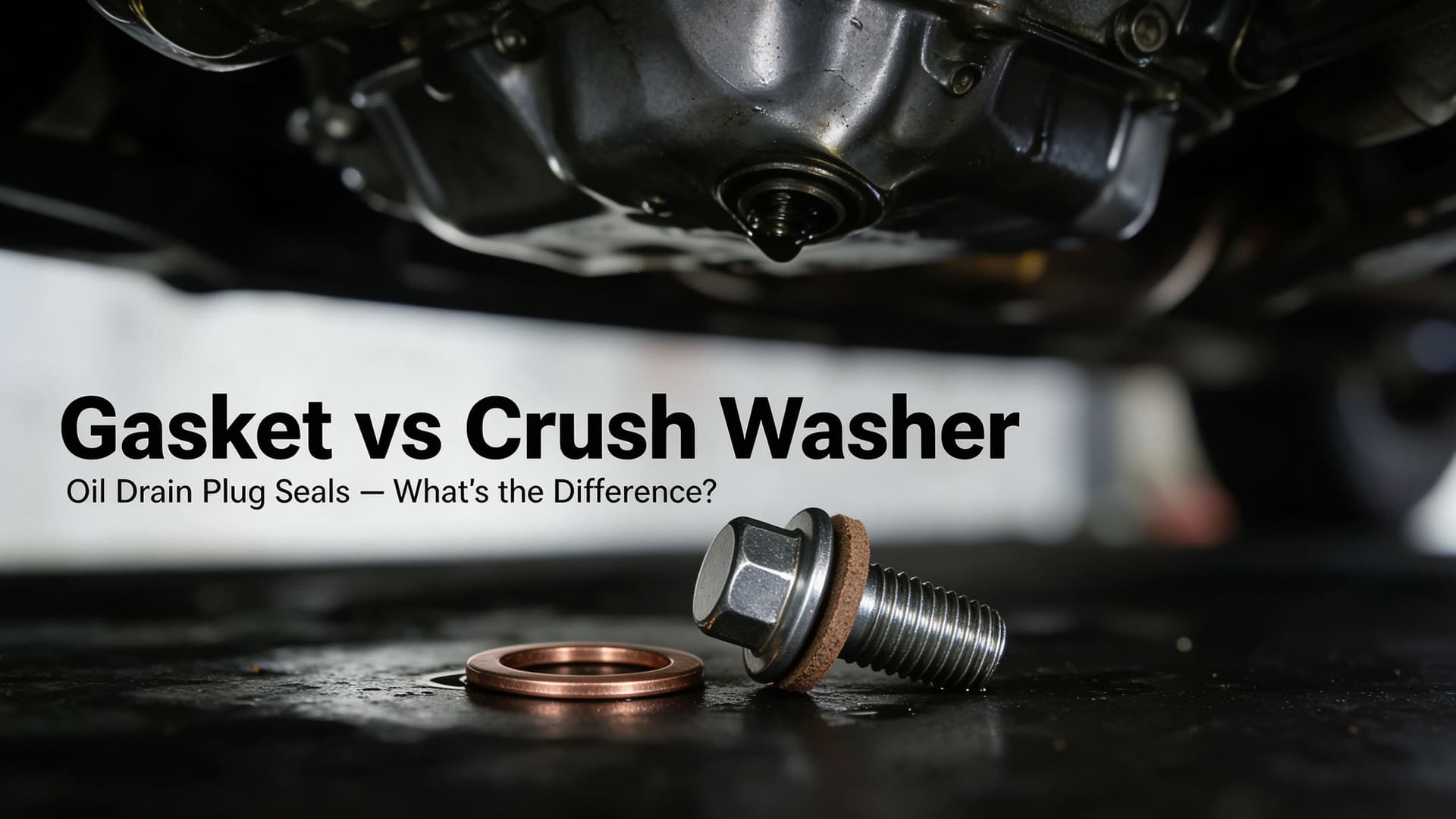
An oil drain plug gasket and a crush washer do the same basic job: they seal the gap between the drain plug head and the oil pan. The difference is how they seal, whether they deform on installation, and whether they can be reused.
The safest rule is simple: use the sealing type specified for the plug and pan, install it in the correct direction, and replace any washer that is crushed, cracked, hardened or leaking.
Quick answer
| Part | How it seals | Reusable? |
|---|---|---|
| Crush washer | Deforms when the plug is tightened | Normally no |
| Fibre gasket | Compresses to fill small surface imperfections | Usually no |
| Rubber O-ring or seal | Compresses against a matching seat | Only if undamaged and specified |
| Bonded seal | Rubber section is bonded to a metal washer | Usually no |
| Copper washer | Anneals and crushes to form a seal | Typically single-use unless re-annealed correctly |
A crush washer is a type of drain plug gasket. The terms overlap, but not every drain plug gasket is designed to crush.
What a drain plug gasket does
The threads hold the plug in place. The gasket creates the fluid-tight seal between the plug head and the sealing surface on the pan.
If the gasket is missing, compressed, cracked or made from the wrong material, oil can weep past the plug even when the thread is correct. Over-tightening is not a repair; it can crush the washer further or damage the pan.
Common drain plug gasket types
| Type | Best for | Watch for |
|---|---|---|
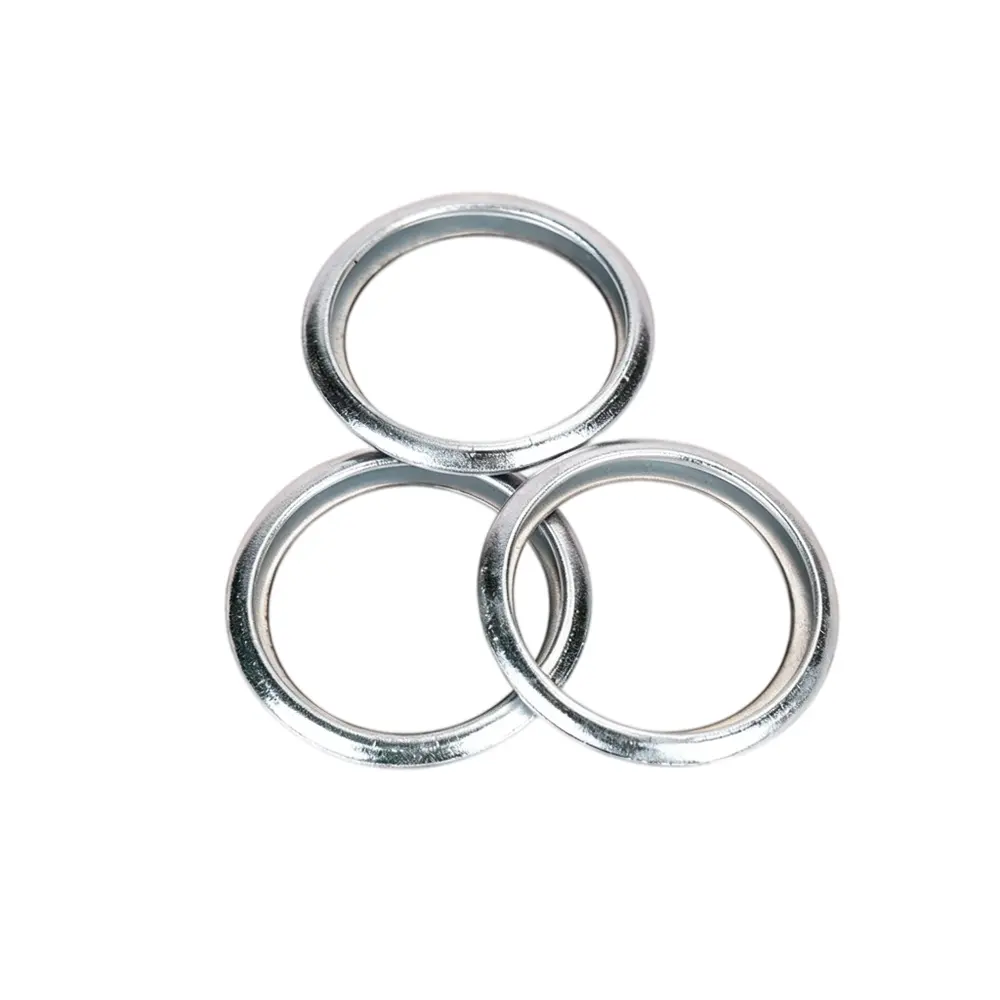
| Aluminium crush washer | Common metric drain plugs | One-use deformation; correct inside and outside diameter |
| Copper crush washer | Heat and pressure resistance | Hardened copper may not seal without annealing |
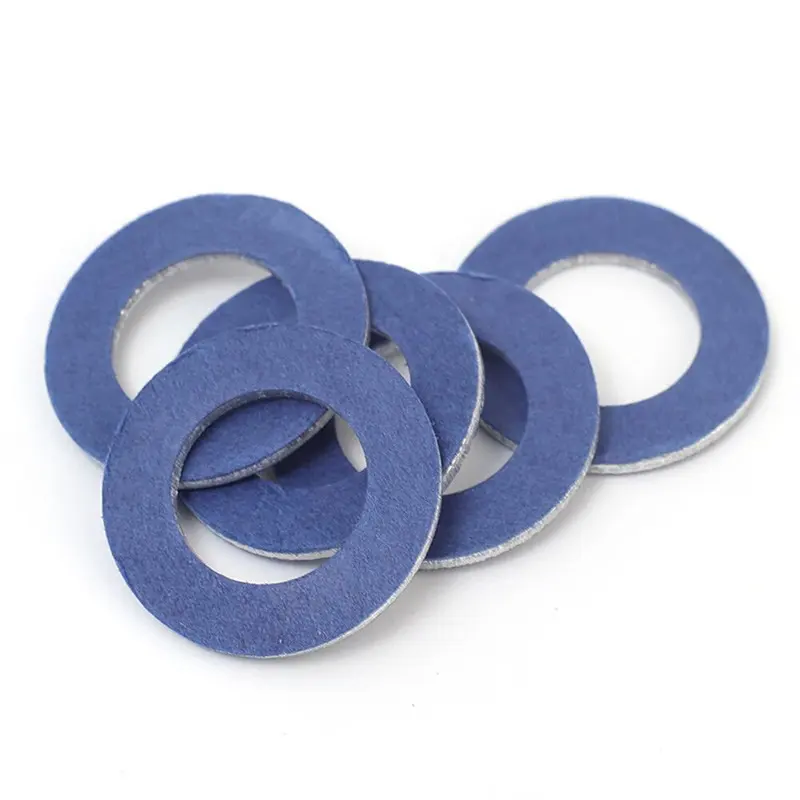
| Fibre washer | Older plugs and lower-pressure applications | Cracking, swelling or oil saturation |
| Rubber seal | Plugs designed for an O-ring or rubber seat | Wrong groove diameter or heat rating |
| Bonded seal | A metal washer with a bonded rubber lip | Installing metal-to-pan when the rubber lip must face the pan |
| Nylon washer | Specific applications and some transmission plugs | Cracking or over-compression |
Size matters more than colour
The outside diameter is not enough. A drain plug gasket must fit the plug and the sealing surface.
| Measurement | Why it matters |
|---|---|
| Inside diameter | Must clear the plug thread and centre on the plug |
| Outside diameter | Must cover the sealing seat without hanging over an oil passage |
| Thickness | Changes crush depth and installed torque |
| Material | Must tolerate oil temperature and the mating surface |
| Direction | Some bonded or rubber seals have a specific facing direction |
A washer that slides loosely over the plug may be the wrong inside diameter. A washer that does not cover the pan seat cannot seal even if it fits over the threads.
Crush washer direction
Most flat aluminium, copper and fibre washers can be installed either way because both faces are the same. Bonded seals and some rubber-faced washers are directional.
Look at the old washer before removing it:
- Note which face touched the plug head.
- Note which face touched the oil pan.
- Check whether the rubber lip sits inside a groove or against a flat surface.
- Compare the replacement before tightening.
If the original washer is missing, use the vehicle or plug specification. Do not guess based on appearance alone when the replacement has two different faces.
Can a drain plug gasket be reused?
A crush washer, fibre washer or compressed rubber seal should normally be replaced at every drain. Once the plug is tightened, the material has already deformed against the old surface.
Reusing a compressed washer can work briefly and then weep after a few heat cycles. It is not a reliable repair, especially on a vehicle that is serviced regularly.
Copper washers can sometimes be re-annealed by an experienced technician, but most shops simply fit a new one. Aluminium crush washers should not be reused.
Oil drain plug leaking after an oil change
| Symptom | Likely cause | Next check |
|---|---|---|
| Slow drip at plug | Missing, damaged or wrong washer | Remove plug and inspect the seal |
| Oil around plug head | Washer not seated or plug loose | Check seating surface and torque |
| Leak started after service | Old washer reused or omitted | Fit the specified new gasket |
| Plug turns without tightening | Damaged thread or wrong pitch | Stop and inspect the pan thread |
| Leak after over-tightening | Crushed gasket or distorted sealing surface | Replace the washer and inspect the seat |
| Oil higher on the pan | Another seal or gasket may be leaking | Clean the area and recheck |
Do not keep tightening a leaking plug. If the plug is cross-threaded, the pan thread may need repair. Stop the engine and seek qualified help if the leak is heavy or the plug is loose in the thread.
Thread pitch and gasket size are different
An M14 x 1.5 plug and an M14 x 1.25 plug both have a 14 mm nominal diameter, but they use different thread pitches. The washer may fit over both plugs and still be wrong for the application.
Confirm:
- Thread diameter.
- Thread pitch.
- Plug shank length.
- Gasket inside and outside diameter.
- Gasket material and direction.
- Vehicle-specific torque.
Use the magnetic drain plug thread-size guide when the plug number is unknown, and the oil drain plug gasket size guide when the thread is known but the washer is missing.
Installation checklist
- Clean the pan around the drain hole.
- Inspect the plug threads and sealing face.
- Fit the correct new gasket.
- Start the plug by hand.
- Tighten to the manufacturer's torque specification.
- Refill with the specified oil.
- Run the engine briefly and check for a weep.
- Recheck after the vehicle has cooled.
Avoid using thread sealant as a substitute for the correct gasket unless the manufacturer specifically requires it.
Wholesale gasket planning
Drain plug washers are easy to lose and easy to stock in the wrong size. A practical workshop range starts with the thread sizes and vehicle families the shop sees most often, then adds separate bags for each gasket diameter and material.
Label mixed stock by thread size, inside diameter, outside diameter and material. Keep crush washers separate from rubber seals, because they are not interchangeable even when the outside diameter looks similar.
Browse the oil drain plugs and gasket collection or contact MotiveCrate for mixed-carton wholesale quantities.
Frequently asked questions
Is a drain plug gasket the same as a crush washer?
A crush washer is one type of drain plug gasket. Other types include fibre, rubber, bonded and nylon seals. The correct type depends on the plug and pan design.
Which way does an oil drain plug crush washer go?
A flat metal crush washer normally has no direction. Directional rubber or bonded seals must be installed with the sealing lip against the specified surface.
Can I use two washers to stop a leak?
No. Stacking washers changes crush depth, torque and sealing behaviour. Use one correct gasket and repair the sealing surface if it is damaged.
Why does my drain plug still leak after replacing the gasket?
The washer may be the wrong size or material, the sealing surface may be damaged, or the plug may be loose, cross-threaded or over-tightened. Inspect the plug and pan before adding torque.
Are drain plug gaskets universal?
No. The inside diameter, outside diameter, thickness and material must match the plug and sealing surface even when the thread size is the same.
Parts mentioned in this guide
Replacement options matched to the part type and vehicle applications in this article.
Shop these parts by vehicle
Makes whose parts pages list this guide. Open one to see the models and the exact part numbers we carry for them.
Need help matching a part?
Email [email protected] or message us on WhatsApp with your year, make, model and trim and we will confirm the part number for you.
MotiveCrate supplies aftermarket replacement parts and is not affiliated with any vehicle manufacturer. Fitment information is a compatibility guide — always verify the part number before ordering.