MotiveCrate Guides
Spray or Hold? How to Diagnose a Washer Nozzle vs a Trim Clip
Washer nozzle not spraying, or a trim clip that will not hold? Run these checks before buying — four parts, two failure modes, and the test that separates them.
Published October 18, 2026 · Updated October 18, 2026 · 8 min read · Reviewed by MotiveCrate
Four parts, and the first useful thing to notice is that they split cleanly in two. Two are nozzles: they exist to spray washer fluid, and when they fail something stops spraying, leaking or aiming. Two are clips: they exist to hold a panel, and when they fail something moves.
That split is not academic. It decides what you check first, and it stops you buying a nozzle when the fault is a pump, or a clip when the fault is a stripped hole.
Short answer: test the system before you buy the part
- Nothing sprays from either side and the pump is silent: fuse, relay or pump. A nozzle will not fix it.
- Nothing sprays but the pump runs: blocked line, empty reservoir, stuck check valve, or a hose off behind the bumper.
- One side only: that nozzle is blocked or its hose has detached. Swap left to right to confirm.
- A panel moves but the clip looks intact: the hole or the flange has worn, and a new clip will not hold either.
The rest of this guide is the detail behind those four lines.
| Part | What it does | Vehicle | Years | Packs |
|---|---|---|---|---|
| 9186049 | Headlight washer nozzle | Opel, Vauxhall, Saab | 2002–2008 | 1 pc |
| 15778747 | Windshield washer nozzle | Cadillac CTS, SRX, STS | 2003–2011 | 2 / 5 / 10 / 20 |
| 15733971 | Bumper clip | Chevrolet | 1999–2014 | 25 / 50 / 100 |
| 1249880478 | Rocker panel and door sill clamp | Mercedes-Benz | 1985–1990 | 20 / 50 / 100 |
Headlight washer nozzle: diagnose the pump before the nozzle
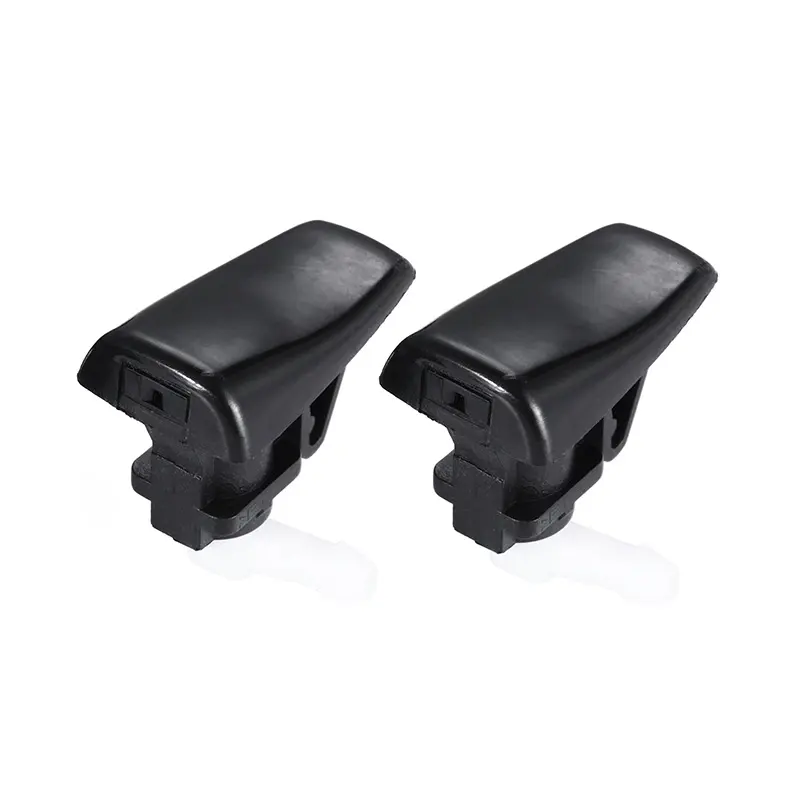
9186049 — headlight washer nozzle, Opel / Vauxhall / Saab. Vectra C 2002–2008, Signum 2003–2008. The part sits in the Windshield Washer Nozzles range, and the exact listing is the 9186049 headlight washer nozzle.
A headlight washer is part of a separate pressurized circuit, often driven by its own pump, and it usually only operates with the headlights on. That makes it the most commonly misdiagnosed of the four: the nozzle gets replaced because nothing came out, and nothing comes out of the new one either.
The solution, in order:
- Turn the headlights on and try again. On most cars with this system the washer only fires with the lights on, by design. If it sprays then, there is no fault.
- Listen at the front while someone operates it. A pump running with no spray means the fault is downstream — nozzle, hose or a popped connector. Silence means the fault is electrical or the pump, and a nozzle will not fix that.
- Check for fluid on the ground. A puddle at one corner with no spray usually means a separated hose behind the bumper, not a blocked nozzle.
- Only then suspect the nozzle. A blocked headlight nozzle is rarer than a blocked windshield nozzle because the aperture is larger; when it does block, the cause is usually dried fluid or debris in the reservoir.
- Replace as a pair if one has failed physically. If one housing is cracked, the other has had the same life, and on a pressurized circuit a crack drops pressure to both.
One practical note on this part: it is listed as a single piece rather than a multi-pack, so compare it per piece rather than against the pack price of the Cadillac nozzle below. Before ordering, confirm whether the listing is the nozzle alone or the nozzle with its housing and hose stub — on some of these applications the two are sold separately and only one of them is what failed.
Packs are 1 piece.
Cadillac windshield washer nozzle: the five-minute test
15778747 — windshield washer nozzle, Cadillac. CTS 2003–2007, CTS-V 2004–2007, SRX 2004–2009, STS 2005–2011, STS-V 2006–2009. See the 15778747 Cadillac windshield washer nozzle.
This is the plainest of the four and the one where a five-minute test saves an unnecessary purchase.
The solution — the five-minute test:
- Operate the washer and listen. Pump running means the circuit is powered. Pump silent means fuse, relay or pump, and no nozzle will help.
- Match the symptom to the cause using the table below.
- If one side sprays and the other does not, the fault is on the dead side only: that nozzle is blocked or its hose has come off. Swap the two nozzles left to right. If the fault follows the nozzle, buy a nozzle; if it stays on the same side, the hose is the problem.
- Clear a blockage before replacing. Compressed air or a fine pin at the aperture, in the direction the fluid flows. Many nozzles sold as faulty are simply scaled up.
- Replace in pairs when the aim is wrong. A nozzle that sprays but misses the glass has a geometry fault, and if one has gone the other is the same age.
| What you see | Most likely cause |
|---|---|
| Nothing from either side, pump silent | Fuse, relay or pump |
| Nothing from either side, pump running | Blocked line, empty reservoir, or check valve |
| One side only | That nozzle blocked, or its hose detached |
| Spray arrives a second late then bursts | Failed inline check valve, not the nozzle |
| Weak, dribbling spray | Partly blocked nozzle or a failing check valve |
| Sprays but misses the glass | Nozzle aim or wrong part number |
Packs are 2, 5, 10 and 20 pieces — small counts, which suits a fault that usually affects one or two positions.
Chevrolet bumper clip: check the hole, not just the clip
15733971 — bumper clip, Chevrolet, 1999–2014. See the 15733971 Chevrolet bumper clip or the full Bumper Clips range.
A fifteen-year application span on one number tells you something useful: this clip was used across a lot of vehicles and a lot of bumper positions. It also means the surrounding panels you meet will range from nearly new to a quarter-century old, and the plastic behaves very differently.
The solution:
- Count what is missing before ordering. Bumper covers commonly arrive with two or three retainers already gone. If three are missing, order a pack rather than three pieces.
- Work along the cover, not at one point. A bumper wraps around the wing, so the release direction changes as you move. Leaning on one spot loads a single clip and cracks the cover.
- Inspect the hole before fitting the new clip. On older cars the tab or the hole is often enlarged or split. A new clip in a damaged hole grips for a week and then lets go.
- Replace every clip you disturb. Bumper clips have usually absorbed at least one knock. A bumper that flaps at speed is a safety-adjacent fault, not a cosmetic one.
- If the cover still sits proud, check the alignment tabs. Covers locate on moulded tabs as well as clips, and a broken tab lets the cover sit out with every clip new.
Packs are 25, 50 and 100 pieces.
Mercedes rocker panel clamp: match the number, not the model
1249880478 — rocker panel and door sill clamp, Mercedes-Benz, 1985–1990. See the 1249880478 rocker panel and door sill clamp or browse Door Panel Clips.
This is the odd one in the group, for two reasons worth stating plainly.
- The year range is narrow. 1985–1990 is not a broad application list, and the listing describes it as a molding or trim clamp used across many models of that era. The honest instruction is: do not buy this on the vehicle name. Match it on the part number from the old clamp, or on dimensions.
- It is a clamp, not a push-clip. A molding clamp holds by squeezing a flange or a molding edge rather than by barbs in a round hole. That changes both the removal method and what loose means.
The solution:
- Identify the mounting type first. If the part grips an edge or a flange rather than seating in a hole, it is a clamp. Levering a clamp the way you lever a push-clip bends the jaw, and a bent jaw never holds again.
- Release by opening the jaw, not by pulling the part off. Slide a thin tool between jaw and flange to open it, then lift.
- On a 1980s car, expect the trim to be more fragile than the clamp. Thirty-five years of sun means the molding will crack before the metal clamp gives way. Warm the area in cold weather.
- Replace the clamp rather than straightening it. Straightened spring steel does not return to its original tension; it holds for a while and then releases.
- If the molding still sits loose, check the flange. Rust or deformation is common at this age, and no clamp grips a flange that has gone thin.
Packs are 20, 50 and 100 pieces.
The decision rule
Before buying anything, answer one question: is the fault in the part, or in what the part attaches to?
For the nozzles, the part is at fault only if fluid reaches it. Test the pump and the hose first, and swap left to right where there are two. For the clips, the part is at fault only if the hole or the flange is sound. Model codes and year ranges are confirmation; the diagnosis comes first.
FAQ
How do I know if the washer nozzle is clogged or the pump is broken?
Operate the washer with the headlights on and listen at the front. A running pump with no spray points to the nozzle, hose or check valve; a silent pump points to the fuse, relay or pump. A pump that runs but delivers nothing at either nozzle usually means a blocked line or an empty reservoir.
Can I clean a washer nozzle instead of replacing it?
Yes, if the fault is scale or debris. Compressed air or a fine pin at the aperture, worked in the direction the fluid flows, clears most blockages. Replace the nozzle when the aperture is damaged, the housing is cracked, or the spray pattern is still wrong after cleaning.
Why does only one washer nozzle spray?
Because the fault is on that side: a blocked nozzle or a hose that has come off. Swap the two nozzles left to right. If the dead side follows the nozzle, the nozzle is at fault; if it stays put, the hose or its connection is.
How many bumper clips should I order?
Count the empty positions and add one or two. Bumper covers usually lose two or three retainers at a time, and every clip you disturb should go back new. A 25-piece pack covers most single-bumper jobs.
The listing says it fits my year range. Is that a guarantee?
No. Year ranges are what we can document and are a compatibility guide, not a guarantee. Production runs vary by model code, engine and market, so verify the part number against the part you removed before ordering.
Ordering and fitment
- 9186049 headlight washer nozzle — Windshield Washer Nozzles
- 15778747 Cadillac windshield nozzle — Windshield Washer Nozzles
- 15733971 Chevrolet bumper clip — Bumper Clips
- 1249880478 Mercedes sill clamp — Door Panel Clips
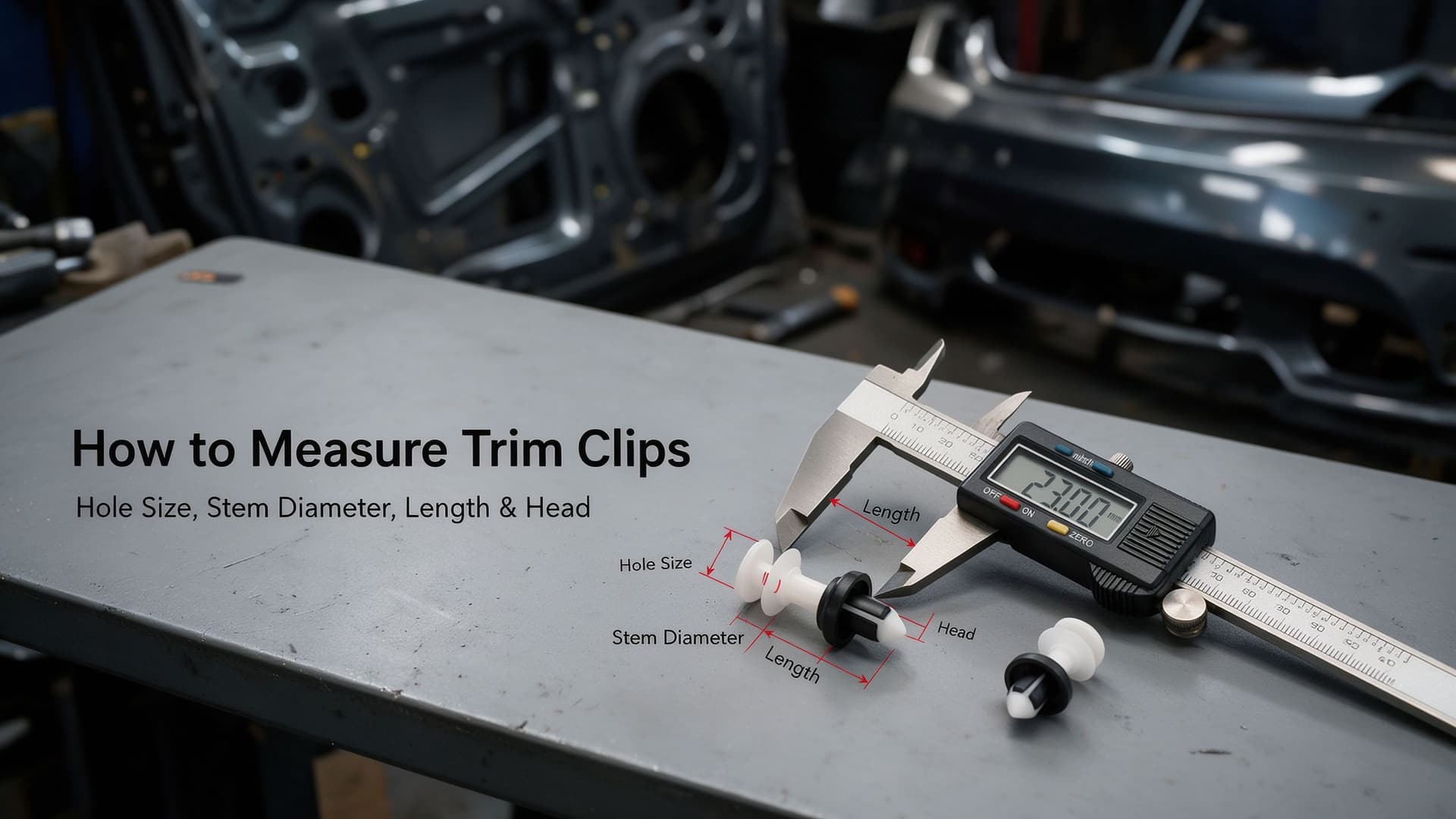
If you have the number off the old part, send it. If the number is unreadable, send stem diameter, stem length, head diameter and the hole it seats into, with a photograph of the part next to a ruler. For trade quantities and delivery country, use the wholesale form — mixed cartons ship for the US, Canada and Mexico, and neutral or private-label packaging is available.
Fitment ranges are the applications we can document and are a compatibility guide, not a guarantee. Production runs vary by model code, engine and market; verify the part number against the part you removed before ordering.
Parts mentioned in this guide
Replacement options matched to the part type and vehicle applications in this article.
Need help matching a part?
Email [email protected] or message us on WhatsApp with your year, make, model and trim and we will confirm the part number for you.
MotiveCrate supplies aftermarket replacement parts and is not affiliated with any vehicle manufacturer. Fitment information is a compatibility guide — always verify the part number before ordering.