MotiveCrate Guides
Door Panel Clips by Brand: Fitment, Types, and How to Buy Them in Bulk
A sourcing reference for interior trim retainers: the clip families behind a door card, why the same fastener differs across brands, how to match an OEM number, and how shops and distributors should stock door panel clips by application rather than by assortment kit.
Published October 7, 2026 · Updated October 7, 2026 · 13 min read · Reviewed by MotiveCrate
Door Panel Clips by Brand: Fitment, Types, and How to Buy Them in Bulk
Most guides to door panel clips are written for somebody standing in a driveway with a broken clip in their hand. This one is written for the person who has to hold the right clips for several hundred vehicles and cannot afford to guess.
The two jobs need different information. A driveway repair needs a removal sequence, and we have that in our door panel clip removal guide and our door panel rattle diagnosis guide. A sourcing decision needs to know which clip family a panel uses, why the same-looking fastener changes across model years, and which numbers are worth holding depth on.
That second question is what this article answers.
Watch: Wholesale Volkswagen Door Panel Clips
What we actually hold
Before anything else, the scale, because it drives the rest of the article.
| Door panel and interior trim clips in the Door Panel Clips collection | 142 |
| With a stated part number | 129 |
| With stated vehicle applications | 132 |
| Makes and platforms covered | 40+ |
| Model years represented | 1984 – 2026 |
That spread is the point. A clip is not a commodity with a size — it is a part number with a vehicle attached, and the range runs from a 1984-vintage European door card to a 2026 model-year vehicle whose panel is held on by a fastener that did not exist a decade ago.
The four families behind a door card
Every retainer we stock does one of four jobs. Knowing which job a panel needs narrows the search before you look at a single dimension.
Push-in retainers. The common case. The barbs splay behind the sheet metal or the plastic boss and hold by expansion. This is the largest group by far, and the one where a millimeter of stem diameter decides whether the panel is tight or rattling.
Applique and molding clips. Shorter barbs, made to work against a shallow plastic boss rather than sheet metal. They turn up on door cards more often than people expect, because modern panels increasingly mount trim appliques directly to the card rather than to the door shell.
Sill and rocker trim clips. Frequently filed under door panel clips because they are sold to the same buyer and fail in the same way, but they hold exterior-adjacent trim. The Toyota, Volkswagen and Hyundai sill clips in our range are this family, and their stem length is set by the trim's stand-off from the body rather than by a door frame.
Two-piece and centre-pin clips. A post or pin locks the barbs open. They cannot be pulled until the pin is released. Less common on door cards than on bumper covers, but present on enough door assemblies to be worth identifying before applying force.
Why "the same" clip differs across brands
This is the part that costs buyers money, and it is not arbitrary.
Head diameter is set by the trim board, not the door. The head sits against the back of the card and spreads the load. A softer or thinner board needs a wider head, or the clip pulls through. That is why two clips with identical stems can have visibly different heads.
Stem length is set by the panel's stand-off. Fit a clip with a shorter stem than the original and the barbs still grip, but the panel no longer sits at the right height against the frame. The result is a panel that is tight at the clips and still rattles, because the board is no longer preloaded against the door.
Barb geometry is set by what the clip seats into. Sheet metal takes one barb profile; a moulded plastic boss takes another. This is the single most common reason an aftermarket clip "fits but does not hold" — the barbs were designed for the wrong substrate.
Material follows the heat. Interior plastics see direct sun through glass and then cold at night, repeatedly. Compounds differ in how they handle that cycle, and a clip that is fine in a temperate market can go brittle in a hot one.
The practical consequence: matching on overall length is the wrong match. Stem diameter, shoulder height and barb geometry are what determine fit, and none of them are visible in a product photograph.
A fitment reference across makes
The table below is a sample of the range, chosen to show how the same job is answered differently by different manufacturers. Every one of these is a number we hold.
| Make / platform | Part number | What it holds | Year span |
|---|---|---|---|
| Mercedes-Benz | 0119887678 | Inner door panel and trim fastening | 1990–2007; Smart Fortwo 2008–2016 |
| Volkswagen / Audi | 6Q0-868-297 | Door panel trim clip, Golf / Passat / Caddy / Jetta | 2005–2016 |
| Mazda | KD53-50-M38 | Door panel trim clip, cross-references to BJS7-50-M38 | 2013–2021 |
| Ford / Lincoln | W713297-S300 | Door trim panel retainer, also used as liftgate trim and air duct rivet | 2008–2025 |
| Tesla | 1110167-00-A | Outer rocker molding trim clip, Model 3 | 2017–2026 |
| Cadillac | 11601845 | Door sill and rocker panel trim, XTS / ATS-L / CT4 / CT5 / CT6 / Lyriq / GT4 | 2013 onward |
| Toyota | 75397-58030 | Side skirt and rocker molding retainer, Alphard / Vellfire 20-series, Noah / Voxy 80-series | 2008–2021 |
Two things are worth reading out of that table.
Cross-reference runs one way more reliably than the other. The Mazda clip is listed under more than one number for the same physical part, and the Toyota number serves four different model lines. When you match by number, the supersession chain matters as much as the number you started from.
One retainer often serves several locations on one vehicle. Ford's W713297-S300 is a door trim retainer and an air outlet duct rivet on the same car. It is the right clip for the door panel on the applications that use it — and a shop that fits by shape rather than by number will eventually fit it where a different retainer belongs, and the comeback looks exactly like the fault it was meant to fix.
Where these numbers come from
The clip below is the range itself rather than a single repair, which is the right place to start if you are buying for a shop or a reseller instead of for one car. It is a short walk through the retainers we hold — the same numbers as the table above, at the scale a trade buyer orders them.
What the clip will not tell you, and what no video can, is whether a given number fits your vehicle. That still comes down to the method: confirm the mounting location, confirm the substrate the clip seats into, then state the number — and check what the number supersedes. Where we cannot document an application, the listing says so instead of guessing. The door panel rattle guide covers the seating technique and the diagnosis in full, and the cross-reference lookup will match a number you already have.
Buying by application, not by kit size
This is the single biggest difference between how a hobbyist and a trade buyer should buy clips, and it is worth being blunt about.
A 400-piece universal assortment looks efficient and is not. Those kits are built around the sizes that sell in volume, and that volume is driven by exterior trim, splash shields and bumper covers. Buy one to service door cards and the odds are good that none of the compartments matches the clip you removed, because the sizes that fill the box are not the sizes a door card uses.
The pattern that works:
Buy a small number of numbers, deep. Trade buyers do better holding ten part numbers at 500 pieces each than one kit with two hundred sizes they will never fit. Depth on the right numbers is cheaper per piece and does not leave dead stock.
Match the pack to the job. One door card takes eight to fourteen clips. A 20-piece pack covers one door with spares; 50 covers a pair of front doors and the rears on most cars. Buying a 20-piece pack for a two-door job leaves you short on the second one.
Mixed cartons, not mixed kits. Several part numbers travel in one carton when the packaging allows it. You pay freight once, and you keep the numbers separate on the shelf — which a single mixed kit does not let you do.
Private label and retail packaging. If retail is part of your channel, neutral packaging, barcoded retail packs or your own label are all available, and setting that up early is cheaper than reworking it later. The incremental cost sits in the packaging, not the clip.
Check the supersession chain before you commit to depth. Ordering 1,000 pieces of a number that was superseded last year is an expensive way to learn that the old number no longer appears on a dealer diagram.
Volume breaks typically start at 100, 500 and 1,000 pieces per part number, and the 1,000-piece price is usually where the margin sits for anyone moving clips steadily.
How to identify a clip you cannot read
Half the job is a clip with a number you cannot make out, or one that came out in two pieces. Our retainer matching guide covers the identification method in full — head shape, stem length, barb design, panel slot. Two things are worth repeating here because they are what buyers get wrong most often.
Stem diameter is the dimension that disqualifies a clip. Not overall length. It is the measurement that is invisible in a product photograph and the one that decides whether the clip seats or falls out.
Look up by model code, not marketing name. Toyota's 20-series Alphard and 80-series Noah use different clips from the 30-series cars, and a look-up by "Alphard" alone will not tell you that. This is the single most common cause of a wrong order on a platform that spans several generations.
If the number is unreadable and the dimensions are ambiguous, our OEM cross-reference lookup will match a number you do have, and the vehicle fitment guide explains how we state year ranges. When neither gets you there, send a photograph of the clip next to a ruler — that is faster than a second wrong order.
Stocking for a shop or a reseller
The buying decision that matters most is which numbers to hold depth on. Three rules that hold up:
Stock what your bay sees, not what the catalog offers. A general repair shop and a European specialist need different depth on entirely different numbers. The 142 clips in the range exist because somebody, somewhere, needs each of them — not because any one buyer needs all of them.
Hold depth on the numbers that come back. A clip that fails repeatedly on one model is a clip worth stocking deep, and the repeat failure is often the material rather than the installation. Under-bonnet and exterior-adjacent applications see more heat and UV, and the cheaper compounds go brittle faster.
Never reuse a clip on a panel you have open. A clip costs cents. A comeback costs a bay for a morning and the customer's confidence permanently. The panel is already off and the labour is already spent; the clips are noise against that.
Ordering
We stock door panel clips and interior trim retainers with the OEM or interchange number on the listing, the vehicle applications, and the year range stated — including where a number is superseded and what it cross-references to. The full range is in the Door Panel Clips collection, and we are the supplier for the number rather than a reseller guessing at it: if we cannot document a clip, we do not list it.
If you have the number off the old clip, send it. If the number is unreadable, send the four dimensions and a photograph. For trade quantities, send the part numbers, quantities, delivery country and packaging requirements through the wholesale form. Mixed cartons ship for the US, Canada and Mexico, and neutral or private-label packaging is available if you resell.
Dimension and material guidance is general practice rather than a specification for any one vehicle. Always verify the part number against the part you removed before ordering, and confirm the model code rather than the marketing name where a platform spans several generations.
Parts mentioned in this guide
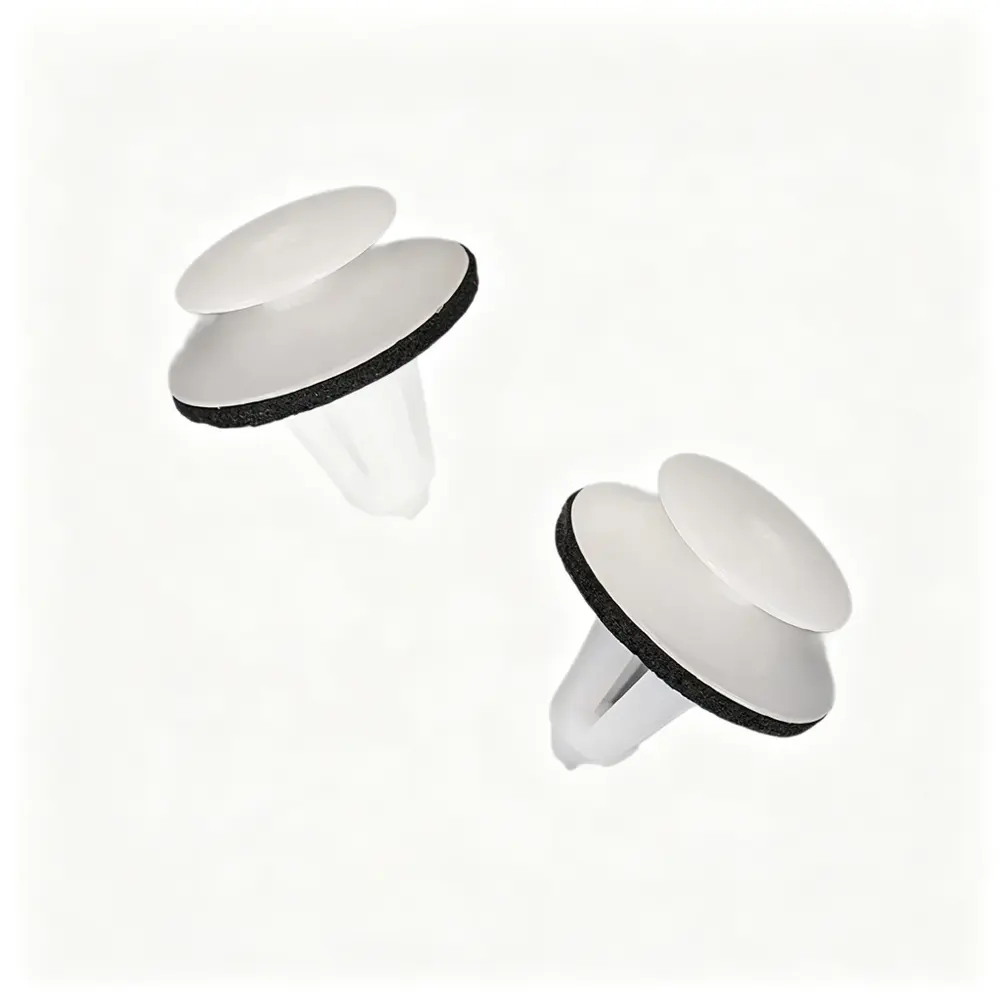
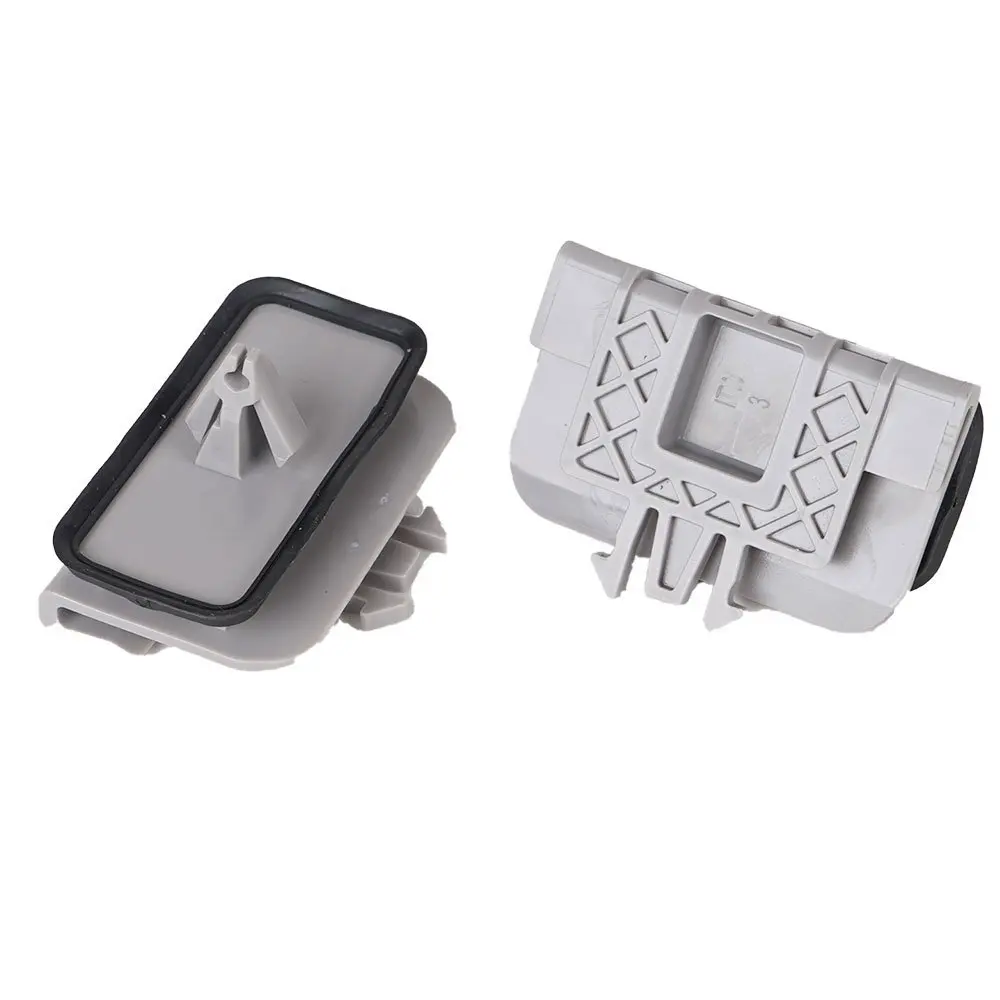
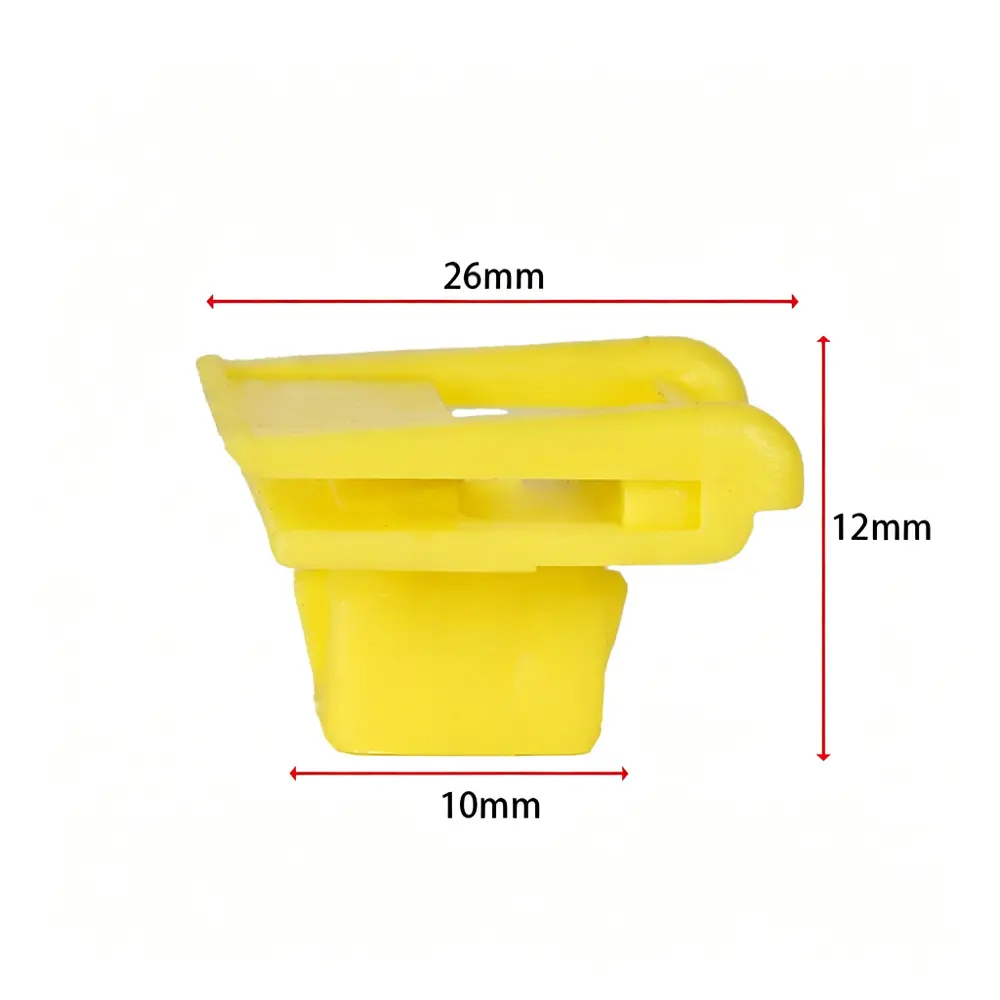
Replacement options matched to the part type and vehicle applications in this article.
Need help matching a part?
Email [email protected] or message us on WhatsApp with your year, make, model and trim and we will confirm the part number for you.
MotiveCrate supplies aftermarket replacement parts and is not affiliated with any vehicle manufacturer. Fitment information is a compatibility guide — always verify the part number before ordering.