MotiveCrate Guides
Loose Door Panel Clip? The Foam Seal Is Doing Two Jobs, Not One
A door panel clip that no longer grips is usually a thickness problem, not a broken part. How a foam seal ring restores clamp load and blocks water at the same time, when to fit a sealed clip and when to add tape instead, with four part numbers.
Published October 11, 2026 · Updated October 11, 2026 · 9 min read · Reviewed by MotiveCrate
Quick answer
A loose door panel clip is usually still intact. It has lost clamp load because the total thickness at the mounting point has changed: the barbs relaxed, the hole opened, or the trim board compressed. A sealed clip with a foam ring under the head adds a compressible spring in the load path and blocks water at the same time. If you already have unsealed clips, one layer of closed-cell foam tape under the head can restore clamp load. Do not tape a cracked or deformed clip; replace it.
A door panel clip that has stopped gripping is usually not a broken clip. The barbs are intact, the part is not cracked, and it still clicks into the hole. It just does not hold the panel tight any more.
The fix people reach for is a shim: waterproof tape wrapped around the stem, or stuck under the head, to take up the slack. That works, and it is a legitimate field repair. But most people who use it think they are adding a seal. They are not. They are restoring clamp load, and understanding that tells you which of the two solutions here you actually want.
What "loose" actually means
A push-in clip holds a panel by clamp load. The barbs splay behind the sheet metal and pull one way; the head presses on the back of the trim board and pushes the other. The panel is held in the gap between those forces, and that gap is set by the total thickness of the assembly at the mounting point.
Three things change that thickness over a vehicle's life, and none are visible:
The barbs relax. Moulded plastic is viscoelastic. Hold a barb splayed for eight years and it comes back straighter than it started. The clip still clicks in. It no longer pulls.
The hole grows. Paint film wears through around the hole, or a plastic boss ovalises. The clip's interference fit was designed around the original diameter.
The board compresses. The trim board around the mounting socket crushes slightly, and the clip's head no longer sits proud enough to press on it.
In all three cases the clip is dimensionally short by a fraction of a millimeter. Nothing is broken.
What the foam ring is really for
Look at a sealed door panel clip — one with a foam or felt ring under the head — and the ring is usually described as a water seal. It is that, but that is the second job.
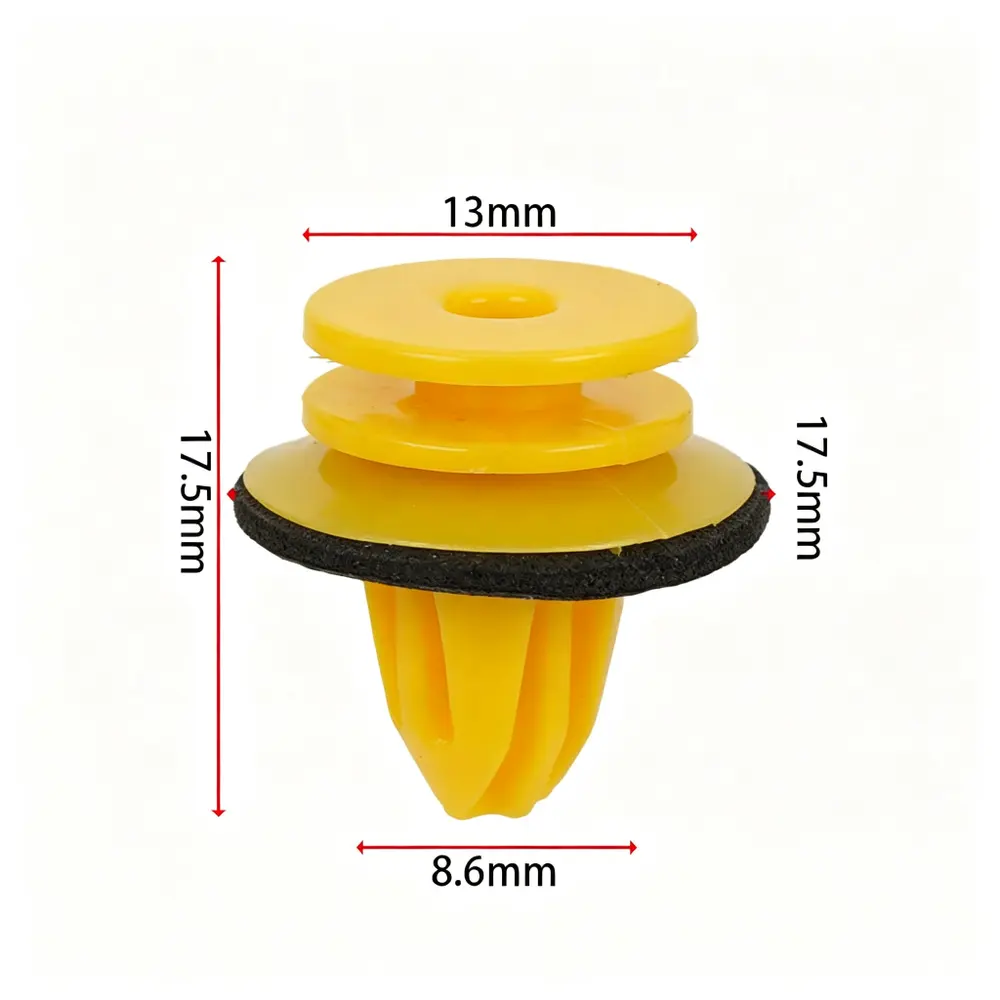
The first job is that the ring is a compressible spring in the load path. It sits between the clip head and the trim board, and when the panel is pressed on the foam compresses and then pushes back. That push is added clamp load, and it stays there because foam recovers its thickness when the load comes off it.
So a sealed clip is not just a waterproof clip. It is a clip with a built-in tolerance compensator. On a vehicle where the hole is a fraction wide or the board has taken a set, the foam is what keeps the panel from moving — and the same foam stops water sitting against the mounting hole, which is how a small trim fault becomes rust a few years later.
That is why the tape trick works: it is the same mechanism, added by hand.
Seeing it on the panel
The clip below shows the back of a door card laid out, and it makes the load path visible rather than theoretical: a run of moulded mounting points, each with a hole where a retainer seats, and a foam collar under each head.
That collar is the thickness this article is about. Seeing it in place explains the mechanism faster than any diagram — it is the compressible layer between the clip head and the board, and it is what pushes back when the panel is pressed on.
It also shows that mounting points are not evenly spaced, and that spacing decides how much one relaxed clip lets the panel move. A tired clip in the middle of a long run is a buzz. The same clip at a corner, where the panel has less support, is a corner that lifts.
The field fix, done properly
If you have standard clips and a loose panel, tape on the clip is a real repair. Three things separate a fix that lasts from one that comes back.
Use closed-cell foam tape, not cloth or paper tape. Cloth absorbs water and then holds it against the hole, which is worse than no tape. Closed-cell foam does not take on water and recovers its thickness.
Put it where the compression happens. The useful place is under the head, on the face contacting the trim board, or as a collar around the stem where it meets the head. Wrapping tape down the length of the stem does nothing for clamp load — the stem is not in the load path.
Keep it thin, and do not tape a damaged clip. One layer, roughly the thickness the panel has lost; more makes the clip hard to seat and can hold the panel off the board far enough that the next panel along no longer lines up. And tape compensates for thickness — it does not restore a barb. If the clip is cracked, replace it and get the seal at the same time.
Four part numbers
The useful split is between clips that already carry a seal and clips that do not — that decides whether the tape step is needed at all.
Sealed from the factory
51418224768 — BMW / MINI door trim panel clip with seal ring — a white push-in retainer with a closed-cell foam ring under the head, the arrangement described above with the tolerance compensation built in. Covers BMW 1 Series (E82, F20), 3 Series (E46, E90, F30, G20), X1, X3, X5 and MINI R50, R52, R56, F56, F60, spanning 1999–2024. BMW used this family across platforms for two decades, which is why one number covers so much.
0009918698 — Mercedes-Benz door trim panel retainer with sealer — the same idea as a separate felt or foam washer rather than a moulded ring. Because the sealer is its own disc, it tolerates a board that has compressed unevenly: the washer takes up the gap across its whole face rather than only where a ring contacts. Applications are model-dependent, so match by part number rather than vehicle name. Cheapest of the four per piece.
No seal — where the tape step applies
8616645 — door panel and trunk lining clip, Land Rover / Ford / BMW / Volvo — a standard retainer with no seal ring and the widest range of the four: Land Rover 2005–2013, Volvo 1997–2018, Ford 2003–2019. That makes it the clip most likely to be in a workshop drawer when a panel needs doing — and if you are taping, this is probably the one.
39964090 — Volvo door trim clip, S40 / S60 / S80 / XC70 — also unsealed, and a good illustration of why the seal matters less on some jobs. A door card sits inside the cabin, away from direct water, so the sealing job here is minor. The clamp load job is not: this panel has to stay quiet at speed, and a relaxed clip will let it buzz long before it lets it drop. Applications are 2000–2016.
| Part number | Seal | Applications | Years | Packs |
|---|---|---|---|---|
| 51418224768 | Foam ring | BMW 1/3/X1/X3/X5, MINI | 1999–2024 | 20 / 50 / 100 |
| 0009918698 | Foam washer | Mercedes-Benz, model-dependent | — | 20 / 50 / 100 |
| 8616645 | None | Land Rover, Volvo, Ford | 1997–2019 | 20 / 50 / 100 |
| 39964090 | None | Volvo S40 / S60 / S80 / XC70 | 2000–2016 | 20 / 50 / 100 |
Which one to fit
If the hole is sound and the clip is intact, a sealed clip is the right answer. It replaces the lost thickness and removes the water path in one part. If you already have unsealed clips, closed-cell tape under the head does the same job.
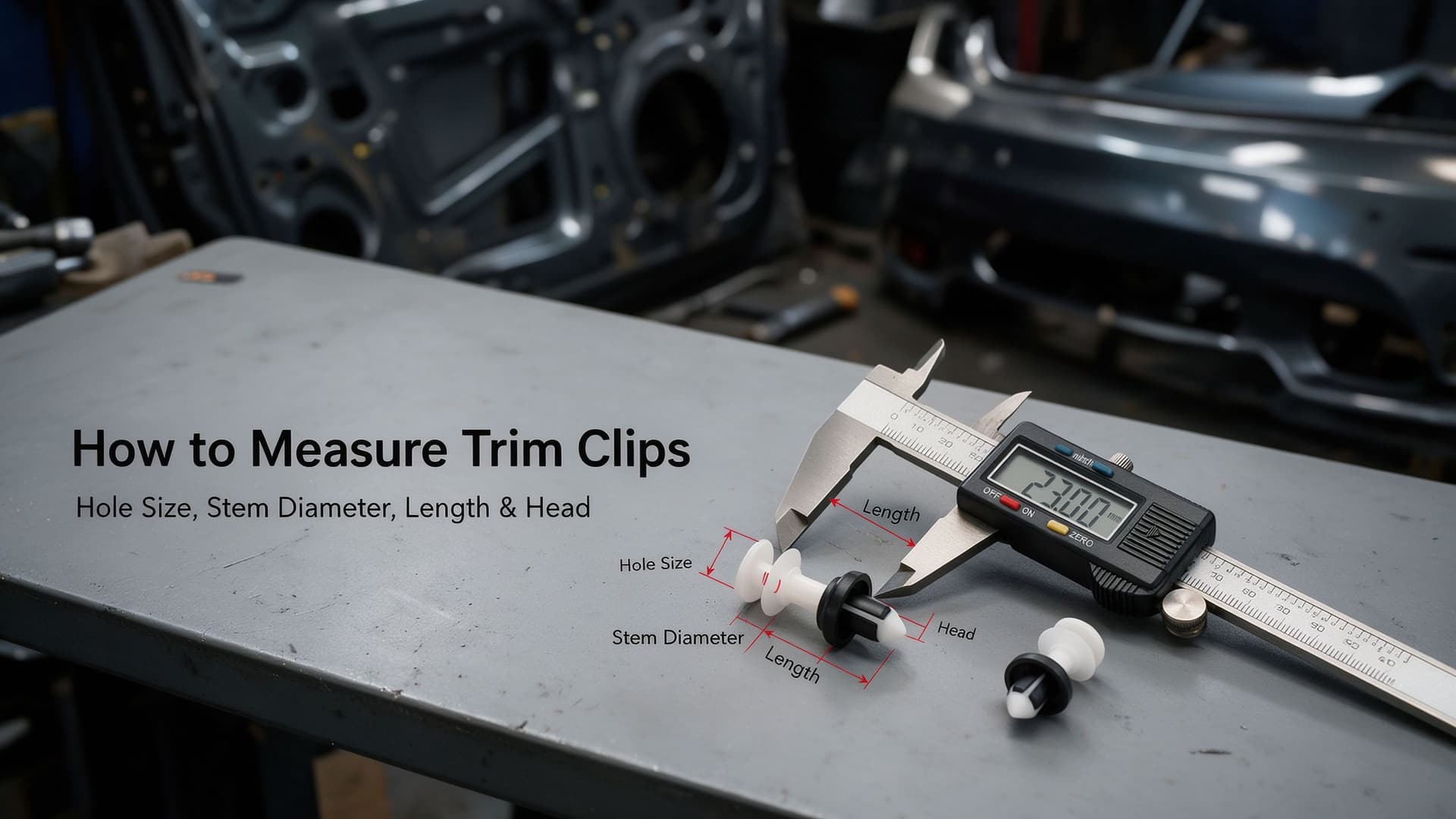
If the panel still moves after a new sealed clip, stop and measure. That is no longer a thickness problem. A stem a millimeter under the hole diameter will never clamp, no matter how much foam is above it. The retainer matching guide covers the measurement side, and the door panel rattle guide covers diagnosis.
If the clip is cracked, tape is not a fix. Replace it.
Ordering
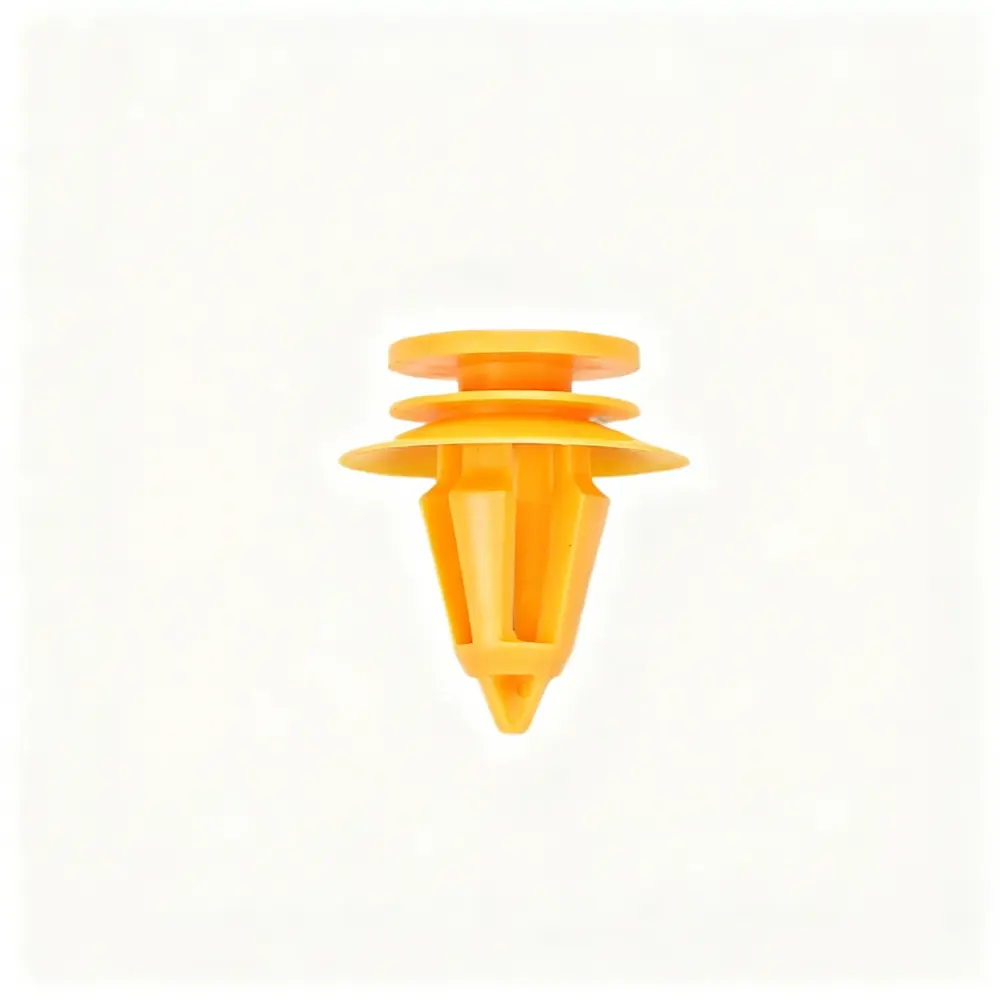
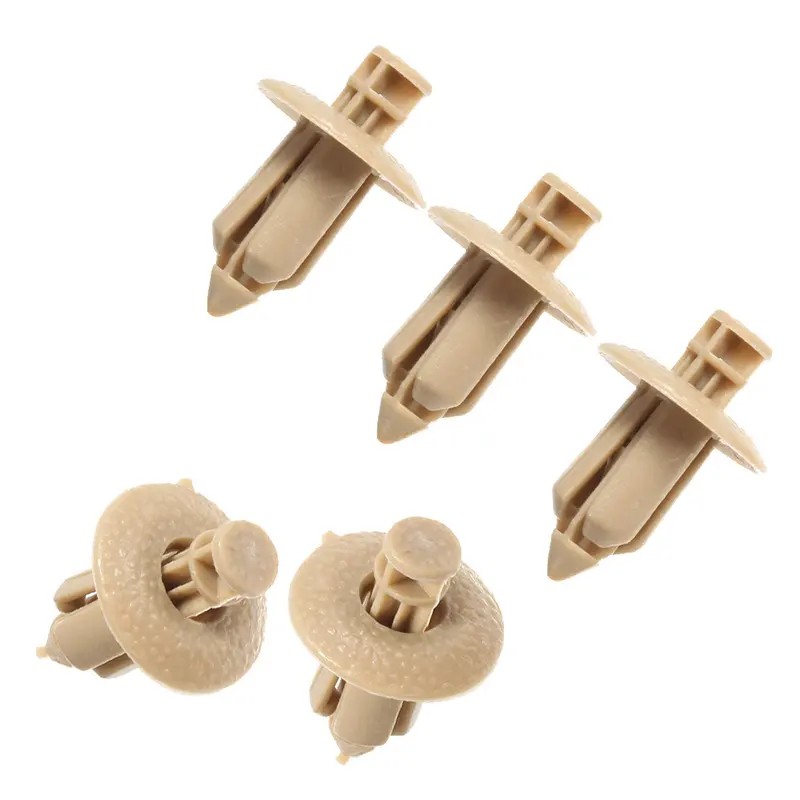
All four are stocked in 20, 50 and 100-piece packs, and all four sit in Door Panel Clips: the BMW / MINI sealed clip, the Mercedes-Benz sealed retainer, the Land Rover / Ford / BMW / Volvo clip and the Volvo door trim clip.
If you are not sure which your vehicle takes, send the number off the old clip, or the four dimensions: stem diameter, stem length, head diameter, and the hole it seats into. For trade quantities and delivery country, use the wholesale form — mixed cartons ship for the US, Canada and Mexico.
Fitment ranges are the applications we can document and are a compatibility guide, not a guarantee. Production runs vary by model code, engine and market — verify the part number against the part you removed before ordering.
Parts mentioned in this guide
Replacement options matched to the part type and vehicle applications in this article.
Need help matching a part?
Email [email protected] or message us on WhatsApp with your year, make, model and trim and we will confirm the part number for you.
MotiveCrate supplies aftermarket replacement parts and is not affiliated with any vehicle manufacturer. Fitment information is a compatibility guide — always verify the part number before ordering.