MotiveCrate Guides
Windshield Washer Nozzle Clogged? 7 Causes and How to Fix Them
Windshield Washer Nozzle Clogged? 7 Causes and How to Fix Them - Clogged windshield washer nozzle? Seven causes in the order worth checking, how to clear each one, and the method that causes more damage than the clog. | MotiveCrate
September 21, 2026 · 5 min read · By MotiveCrate
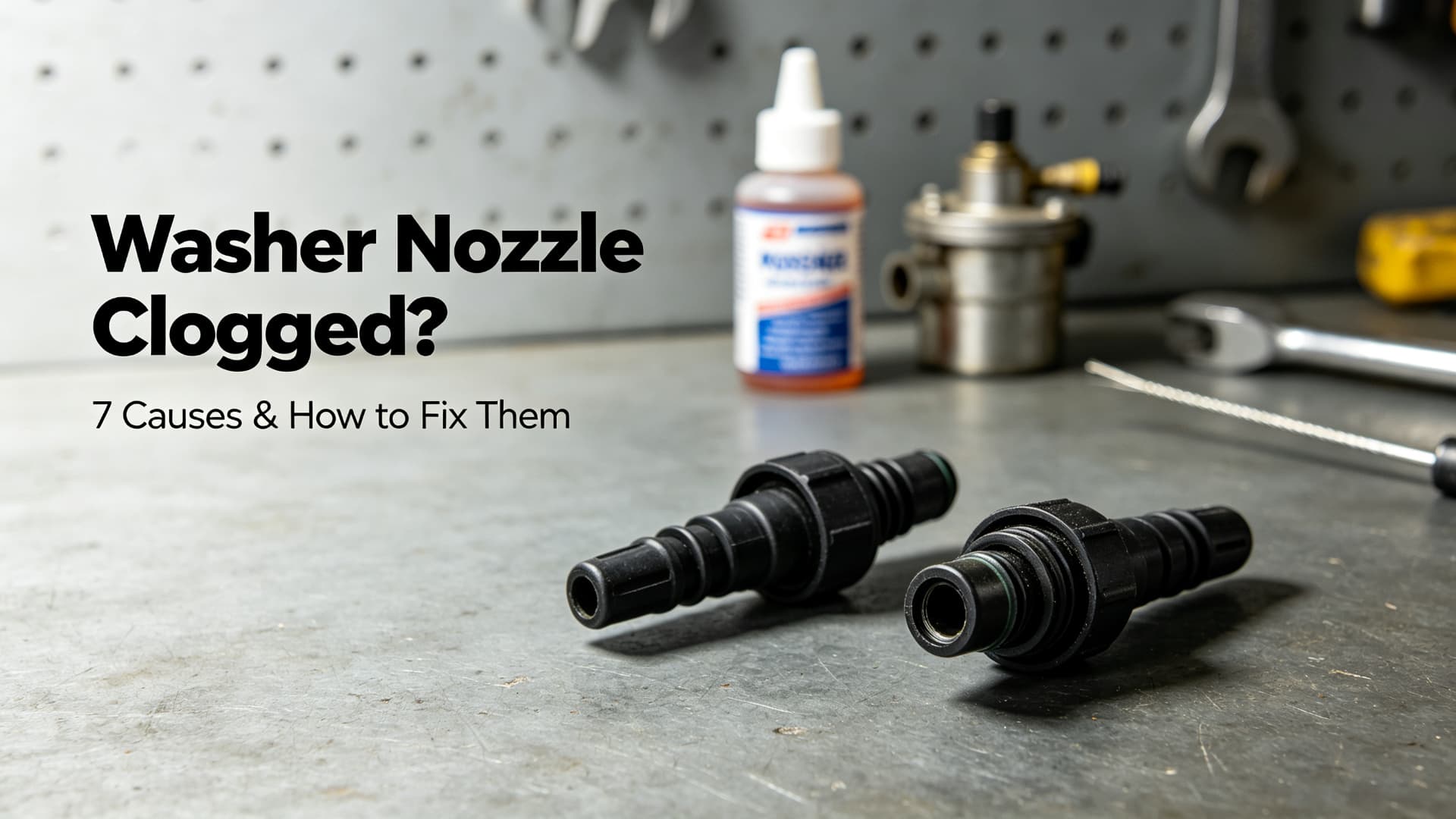
A clogged washer nozzle is the single most common reason a windshield washer stops spraying. The nozzle opening is under 1 mm wide, so it takes very little to block it. The good news: most clogs can be cleared in ten minutes without buying anything, and only a cracked or scaled-solid housing needs replacing. Here are the seven causes in the order worth checking, plus the one method that causes more damage than the clog itself.
1. Hard water scale (the most common)
Washer fluid mixed with tap water leaves mineral deposits. Over months, those deposits build up inside the nozzle orifice until flow stops.
Symptoms: gradually weaker spray over weeks, then nothing. Often affects both nozzles at similar times.
Fix: remove the nozzle and soak it in warm water with a little white vinegar for 30 minutes, then clear the opening with a fine pin or needle. Do not enlarge the hole — you will ruin the spray pattern.
2. Wax, polish or ceramic coating residue
Detailing products oversprayed onto the cowl can bridge the nozzle opening. This is common right after a professional detail.
Symptoms: sudden stoppage, often one side only, shortly after detailing.
Fix: wipe the nozzle face with a soft cloth and warm water. If residue hardened, a plastic toothpick works better than metal.
3. Washer fluid that has gone bad
Some premixed fluids and DIY mixtures (especially soap-based ones) gel over time, particularly in heat. The gel then clogs the nozzle and the hose.
Symptoms: stringy or cloudy fluid at the nozzle, intermittent spray.
Fix: flush the reservoir and lines with clean water, refill with a proper premixed washer fluid. Do not use dish soap — it strips wax and gels.
4. Debris entering through a cracked reservoir cap
A cracked or missing cap lets dust and leaf litter into the tank. That debris is what actually blocks the nozzle downstream.
Symptoms: recurring clogs shortly after cleaning, gritty particles visible in the reservoir.
Fix: clean the tank thoroughly and replace the cap. We stock reservoir caps such as 13227300 (Chevrolet / Buick / Cadillac). Without a new cap, the clog will return.
5. Frozen fluid in winter
Water-based or diluted fluid freezes in the line and nozzle. Freezing can also split the nozzle housing or the hose.
Symptoms: no spray only in cold weather; returns when it warms up.
Fix: switch to a winter-rated fluid matched to your climate. If the housing cracked from freezing, the nozzle must be replaced — see our washer nozzle buying guide.
6. Internal corrosion or a deteriorating hose
Older hoses degrade from the inside, shedding rubber particles that collect at the nozzle inlet.
Symptoms: dark specks at the nozzle inlet, clog returns repeatedly.
Fix: replace the hose. A universal hose kit covers most single-vehicle jobs and includes new T and Y connectors.
7. A failing pump sending debris
A pump whose internal impeller is breaking down pushes plastic fragments into the line.
Symptoms: noise from the pump, debris appearance, clogs that come back immediately after cleaning.
Fix: this is the one case where cleaning is wasted effort. Replace the pump, then flush the lines before fitting anything new.
The method that causes more damage than the clog
Never use compressed air to clear a nozzle while it is still installed.
The pressure can blow the hose off its fitting inside the fender. What was a ten-minute job then requires removing a fender liner or bumper. Always remove the nozzle first, or use low-pressure water.
The same applies to poking a metal pin in aggressively — you can distort the orifice and ruin the spray pattern permanently.
Quick diagnostic table
| Symptom | Most likely cause |
|---|---|
| Both sides weak, worsening over weeks | Hard water scale (1) |
| Stopped right after detailing | Wax/polish residue (2) |
| Cloudy or stringy fluid | Bad fluid (3) |
| Clog returns quickly, grit in tank | Cracked reservoir cap (4) |
| Only in cold weather | Frozen fluid (5) |
| Dark specks, recurring | Hose breaking down (6) |
| Pump noisy, instant re-clog | Failing pump (7) |
| No spray, no pump sound | Not a clog — check fuse and pump |
| Spray arrives late, then bursts | Not a clog — failed check valve |
Frequently asked questions
Can I clean a clogged washer nozzle instead of replacing it?
Usually yes. Remove the nozzle and soak it in warm water with white vinegar, then clear the orifice with a fine pin. Replace it only if the housing is cracked, the retaining clip is broken, or the aim cannot be corrected.
Why does my washer nozzle keep clogging?
Recurring clogs almost always mean debris is still entering the system. Check the reservoir cap (a cracked cap is the usual culprit) and inspect the hose for internal deterioration. Cleaning the nozzle without fixing the source guarantees a repeat.
Can I use vinegar to unclog a washer nozzle?
Yes — white vinegar dissolves mineral scale well and is safe for the plastic housing. Soak for 30 minutes, then flush with clean water. Do not use harsh solvents or bleach.
Is it safe to use a needle on a washer nozzle?
A fine pin used gently is fine. Aggressive poking with a thick needle enlarges or distorts the orifice and permanently ruins the spray pattern. If the clog will not clear with gentle probing, replace the nozzle.
Why did both nozzles clog at the same time?
Because they share the same fluid and the same reservoir. Scale, bad fluid and debris affect both sides together. A clog on one side only points to that side's hose rather than the fluid.
Will compressed air clear a clogged nozzle?
It may, but it can also blow the hose off its fitting inside the fender, turning a small job into a large one. Remove the nozzle first if you want to use air.
Do clogged nozzles fail inspection?
In many jurisdictions a non-functioning washer is an inspection failure item, since it affects visibility. It is an inexpensive fix for the value of passing.
Do you sell washer nozzles in bulk for shops?
Yes — we supply distributors, repair shops, online retailers and private-label brands across the US, Canada and Mexico. See our wholesale and bulk orders page.
Related guides
- Windshield Washer Nozzle Buying Guide
- Washer Nozzle Cross-Reference by Brand
- Washer Check Valve: Why Spray Arrives Late
- Replacement Cost: DIY vs Shop
- All windshield washer nozzles
MotiveCrate supplies aftermarket auto wear parts — oil drain plugs, gaskets, windshield washer nozzles, trim clips and fasteners — for vehicles across the United States, Canada and Mexico. Verify the OEM part number before ordering. We do not sell safety-critical components such as braking, steering, suspension, airbag or seat-safety parts.
Need help matching a part?
Email service@motivecrate.com or message us on WhatsApp with your year, make, model and trim and we will confirm the part number for you.
MotiveCrate supplies aftermarket replacement parts and is not affiliated with any vehicle manufacturer. Fitment information is a compatibility guide — always verify the part number before ordering.